
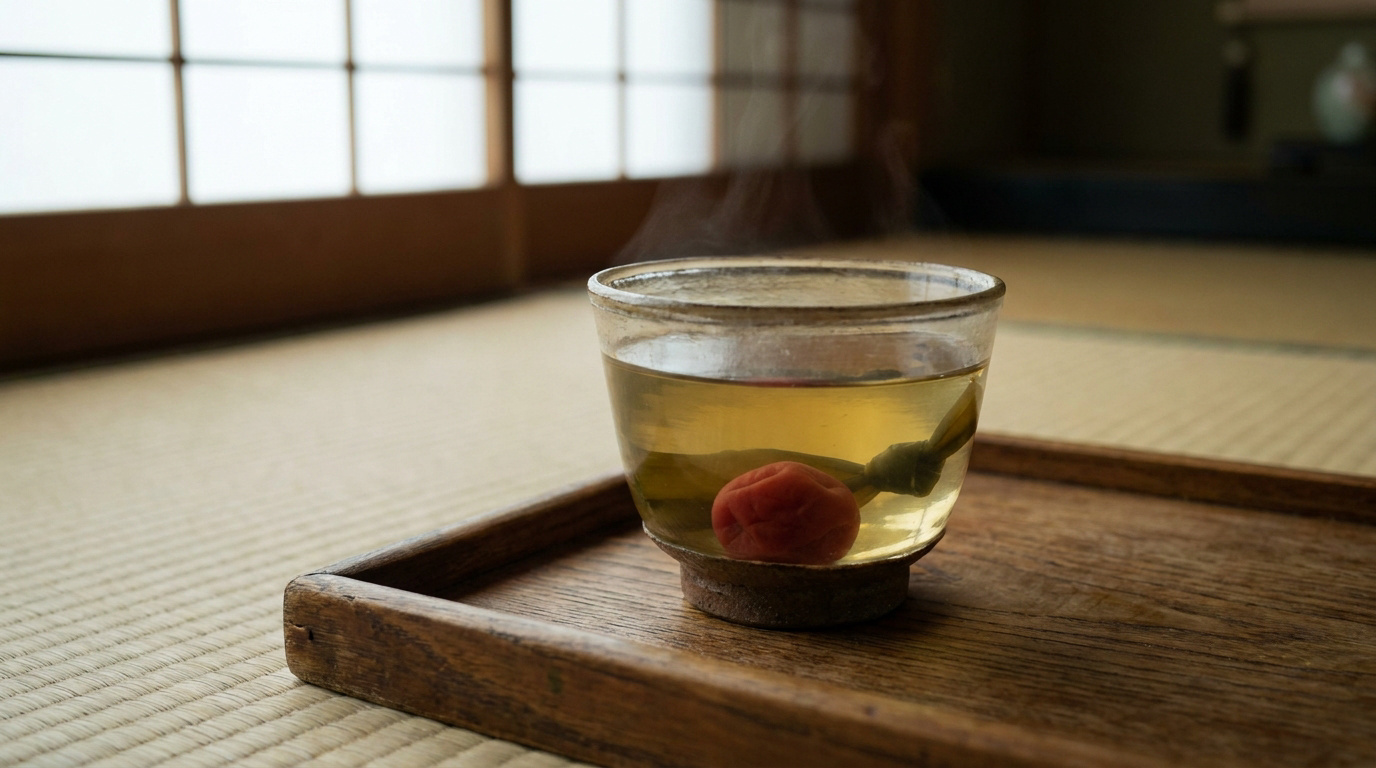
Key takeaway: Obukucha is a symbolic Japanese New Year ritual focused on health and protection rather than formal etiquette. By brewing green tea with pickled plum and knotted kelp, families invite longevity and joy into their homes. This 10th-century tradition offers a simple, accessible way to start the year with mindfulness, balancing festive meals while honoring a legendary imperial healing legacy.
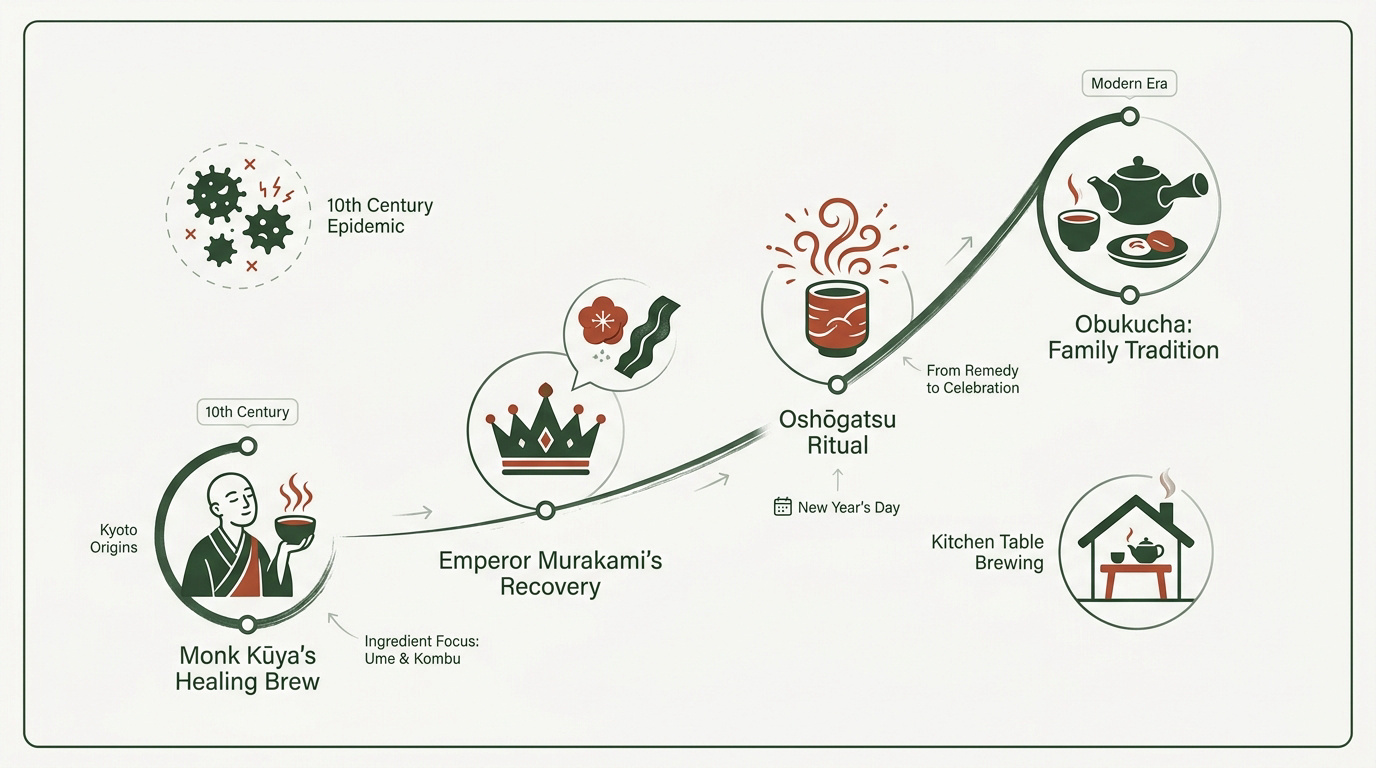
Since the 10th century, the Japanese have celebrated the New Year by drinking Obukucha, a traditional green tea infused with pickled plum and kelp. This ritual originated in Kyoto when Monk Kūya used the brew to halt a devastating epidemic, a healing power later associated with Emperor Murakami’s recovery.
While many families seek a fresh start, few realize how these specific ingredients act as edible charms for health and longevity. We will explore how to prepare this ancient Good Fortune Tea at home to ensure your own Oshōgatsu celebration is rooted in authentic tradition.
- Japanese New Year Tea Rituals: The Roots of Obukucha
- 3 Symbolic Ingredients of the Good Fortune Brew
- How to Prepare the Ritual at Home?
- Integrating Tea into the Broader Oshōgatsu Experience
Japanese New Year Tea Rituals: The Roots of Obukucha
Obukucha, or “Good Fortune Tea,” originates from 10th-century Kyoto where Monk Kūya used green tea, umeboshi, and kombu to halt an epidemic, a ritual later solidified by Emperor Murakami’s recovery.
This imperial endorsement transformed a desperate medicinal tonic into a refined spiritual practice rooted in the legendary healing of the 10th century.
The Healing Legend of Monk Kūya and Emperor Murakami
According to temple tradition at Rokuharamitsuji, Kyoto once faced a devastating epidemic. Streets were filled with despair and death. Monk Kūya emerged as a savior, tirelessly distributing a special tea to the suffering citizens.
Legend holds that Emperor Murakami experienced a remarkable recovery after drinking this brew. This story firmly established the Rokuharamitsuji Temple as the heart of the tradition.
The temple’s legacy endures. Every New Year, monks still serve this specific tea to visitors.
Evolution from Medicinal Tonic to Festive Tradition
The practice eventually shifted from survival to celebration. What began as a desperate remedy for the sick transformed into a joyous Oshōgatsu ritual. Healthy families now drink it to maintain their vitality.
Imperial associations changed the name. Over centuries, the term “Obukucha” replaced older titles, reflecting the tea’s status as a beverage fit for royalty and high fortune.
The practice finally democratized. Common people adopted this once-exclusive elite ritual for their own homes.
Distinguishing Obukucha from Formal Tea Ceremonies
Obukucha is a home-based ritual, unlike the highly structured Chanoyu. It is a warm family tradition rather than an artistic performance. You won’t find rigid social hierarchies here.
The focus remains entirely on household health and prosperity. There are no complex choreographies or strict tea room rules to follow during the first days of January.
Accessibility is the key. Anyone can brew this at the kitchen table without years of training.
3 Symbolic Ingredients of the Good Fortune Brew
While the history is rich, the true power of the ritual lies in its three specific, symbolic components.
Plum and Kelp as Anchors of Longevity
The umeboshi represents much more than a simple garnish. Its wrinkled skin serves as a powerful symbol for a long life. This pickled plum embodies resilience against the harsh winter.
Kombu kelp is tied to the word “yorokobu,” which means joy. Its knotted shape is quite deliberate. It signifies a strong, enduring bond for the coming year.
These ingredients act as edible charms. They offer a silent prayer for health and happiness.
Selecting the Right Green Tea Base
You can choose between Sencha, Bancha, or Genmaicha. Each leaf provides a distinct backbone. Grassy notes or toasted rice aromas anchor the brew. The choice defines the drink’s character.
Regional preferences often dictate the selection. Kyoto families might favor one specific leaf. Meanwhile, Tokyo households often prefer another for their ritual.
Flavor balance is the goal. The tea must offset the salty plum and savory kelp perfectly.
Gold Flakes and Regional Aesthetic Variations
Many people add gold flakes to their cup. They add a celebratory shimmer to the liquid. This small addition elevates the tea from a simple drink to a treasure.
Samurai-style variations offer a different path. Some schools use thick Matcha as a base. This creates a more intense and frothy New Year experience.
Regional blends remain very popular. Every prefecture adds a small local twist to the standard recipe.
How to Prepare the Ritual at Home?
Understanding the symbols is one thing, but performing the brew correctly is where the magic actually happens.
Step-by-Step Guide for the First Cup
Start with the water. Use the very first water drawn on New Year’s morning, known as wakamizu, for purity. This ensures a fresh start for the year.
Place the plum and kelp. Pour the hot tea over them gently to let the flavors meld without breaking the fruit. The umeboshi adds a salty depth to the brew.
Focus on the visual. The plum should sit proudly at the bottom of the ceramic cup. It looks striking against the tea.
The Best Time on New Year’s Day to Drink
Timing is everything on January 1st. Drink the tea during the first quiet moments of the morning, ideally just after witnessing the Hatsuhinode sunrise. This moment is sacred. It brings luck and clarity.
Set the atmosphere. The room should be calm, reflecting the fresh start that the new calendar year promises. Silence helps you focus on the Oshōgatsu Rituals and Tea Traditions.
Connect to tradition. This initial sip sets the tone for the next twelve months. It is a powerful personal reset.
Etiquette for Gifting and Handling the Plum Seed
Address the umeboshi seed. It is polite to leave it in the cup or place it discreetly on a small side plate. Never leave it on the table.
Discuss gifting etiquette. Obukucha sets make excellent holiday presents, provided they are wrapped in traditional seasonal paper with proper mizuhiki knots. Details matter when sharing Happy New Year in Japanese: Oshōgatsu Rituals and Tea Traditions.
Respect the season. Always choose packaging that reflects the transition from winter to spring. It shows true care for the recipient.
Integrating Tea into the Broader Oshōgatsu Experience
Beyond the cup itself, this tea acts as the perfect bridge to the rest of the Japanese New Year feast.
Balancing Osechi-ryōri with Salty Tea Notes
Obukucha’s salty and sour profile cuts through the sweetness of traditional Osechi-ryōri perfectly. This pairing balances the rich, symbolic dishes served during the holidays.
After a heavy holiday meal, the combination of green tea and plum helps settle the stomach naturally. It provides a refreshing contrast to festive foods.
Serve the tea between different courses. This helps cleanse the palate effectively.
Wagashi Pairings for the New Year Palate
I recommend Hanabira Mochi. Its miso paste and burdock root offer a complex sweetness that stands up to the tea’s unique brine and salty notes.
The sharp acidity of the plum makes the delicate bean paste in the sweets taste even richer. It creates a beautiful flavor tension.
Choose sweets mimicking plum blossoms. These colors celebrate the early spring spirit.
Embracing Shun and Ichigo Ichie in January
This ritual marks the precise moment when the tea room transitions from the winter hearth to the spring brazier. It perfectly honors the concept of Shun.
Apply Ichigo Ichie by treating this New Year gathering as a once-in-a-lifetime encounter. Every moment spent with family is truly unique.
Obukucha is more than a drink. It is a mindful entry into a new cycle. Happy New Year in Japanese: Oshōgatsu Rituals and Tea Traditions.
Embrace the spirit of Oshōgatsu by brewing your own Obukucha with pickled plum and kelp to invite health and longevity. Start your year with this mindful ritual to secure good fortune before the festive season ends. This simple cup of tea transforms your future into a journey of clarity and joy.
FAQ
What exactly is Obukucha and why is it called the tea of good fortune?
Obukucha, translated as “Good Fortune Tea,” is a traditional Japanese brew consumed during Oshōgatsu to ensure health and prosperity for the coming year. Its name and status as a lucky charm stem from the 10th century, when imperial recognition transformed it from a medicinal remedy into a refined spiritual practice.
The tradition originated in Kyoto when Monk Kūya used this specific tea to help end a local epidemic. After Emperor Murakami was said to have experienced a remarkable recovery by drinking the brew, the practice became an essential New Year ritual, eventually spreading from the imperial court to households across Japan.
What are the essential ingredients used in a New Year’s tea ritual?
A traditional cup of Obukucha is defined by three symbolic components: high-quality green tea, umeboshi (pickled plum), and kombu (kelp). The tea base can vary by region, with families choosing between the grassy notes of Sencha, the earthy Bancha, or even Genmaicha for a toasted aroma.
The umeboshi represents longevity due to its wrinkled appearance, while the kombu is a play on the word “yorokobu,” signifying joy and enduring bonds. Some celebratory versions also include gold flakes to add a shimmering, festive aesthetic to the first cup of the year.
How do you properly prepare Obukucha at home on New Year’s Day?
To perform the ritual correctly, you should ideally use wakamizu, which is the very first water drawn on New Year’s morning, symbolizing purity. Place the pickled plum and a knot of kelp at the bottom of a ceramic cup, then gently pour the hot tea over them to allow the savory and salty flavors to meld.
The best time to enjoy this brew is during the quiet moments of January 1st, often just after the Hatsuhinode sunrise. Drinking it at this time sets a mindful tone for the next twelve months, serving as a spiritual and physical reset for the household.
Which traditional foods pair best with Japanese New Year tea?
Obukucha is the perfect culinary companion to Osechi-ryōri, the traditional New Year feast. The tea’s salty and sour profile cuts through the sweetness of the various dishes, while the plum aids in digestion after a heavy holiday meal.
For a sweet pairing, Hanabira Mochi is a classic choice, as its miso paste and burdock root complement the brine of the tea. Choosing Wagashi that mimic seasonal colors, such as plum blossoms or pine needles, further enhances the Oshōgatsu experience through the principle of Shun, or seasonality.
Is the Japanese New Year tea ritual different from a formal tea ceremony?
Yes, Obukucha is primarily a home-based family ritual rather than a formal Chanoyu performance. While the “New Year of Tea” in the professional world occurs in November with the Kuchikiri ceremony, Obukucha is an accessible practice that requires no rigid rules or formal training.
It emphasizes household health and the spirit of Ichigo Ichie, treating the family gathering as a once-in-a-lifetime encounter. It is a mindful entry into the new cycle that anyone can brew at their kitchen table to welcome the new year with clarity.