
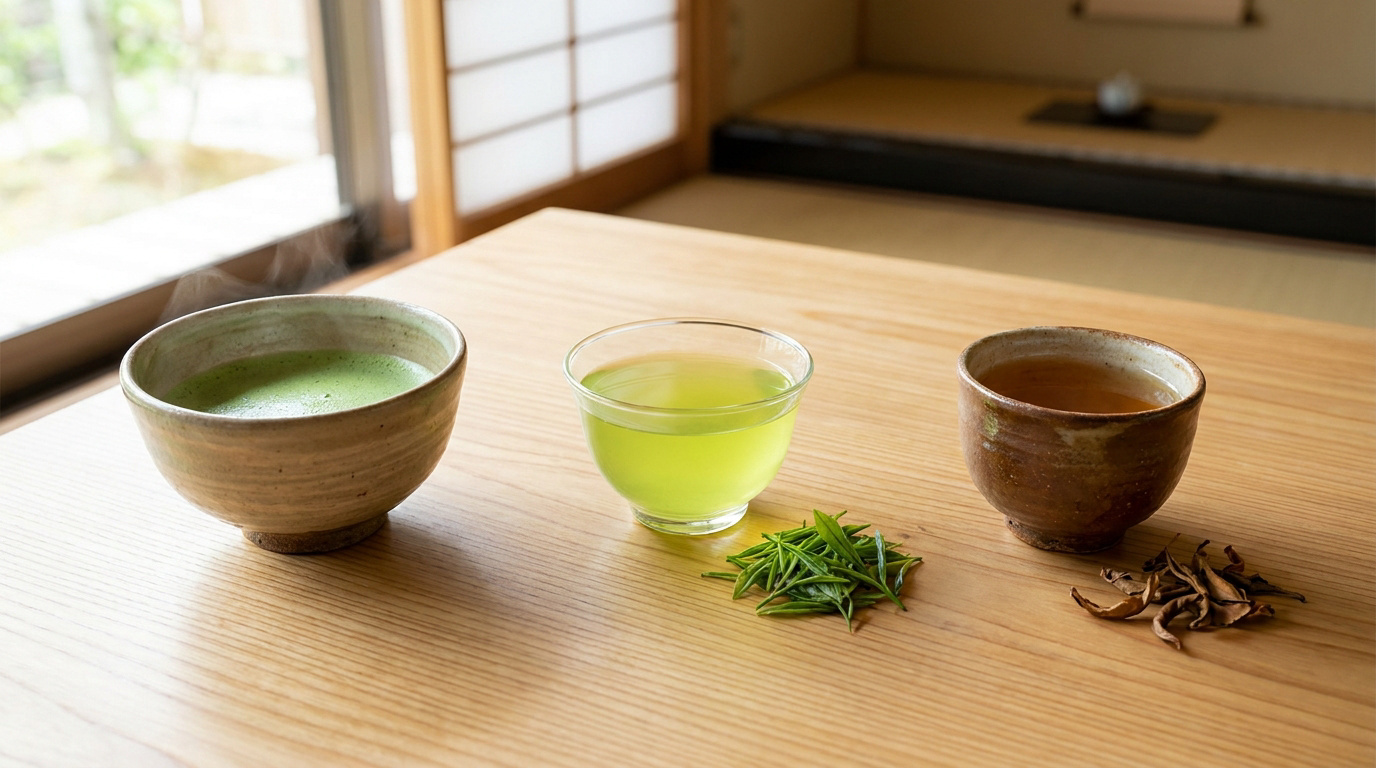
Key takeaway: Japanese tea culture follows a precise seasonal cycle where each harvest offers unique chemical profiles and health benefits. While spring Shincha provides triple the L-theanine for intense umami, summer Hojicha uses roasting to reduce bitterness and caffeine. Traditional autumn aging via the Kuradashi method further transforms leaves into mellow, full-bodied brews, ensuring a ritual perfectly adapted to the year’s natural rhythm.
In Japan, the arrival of spring is marked by the debut of Shincha, a first-harvest tea containing up to three times more L-theanine than later picks. While many enthusiasts appreciate its fresh umami, few realize that the flavor profile of the same tea plant shifts dramatically as the lunar calendar progresses. We often miss the peak of these seasonal nuances by consuming the same brew all year round.
This article explores how the transition from vibrant Shincha to roasted Hojicha and aged Kuradashi defines the Japanese tea cycle, helping you align your palate with the natural rhythms of the year.
- Spring Awakening and the First Seasonal Japanese Teas
- 3 Reasons Why Summer Demands Roasted Hojicha
- How does Autumn Mellow Tea via Kuradashi Aging?
- Winter Rituals and the Intimacy of Matcha
Spring Awakening and the First Seasonal Japanese Teas
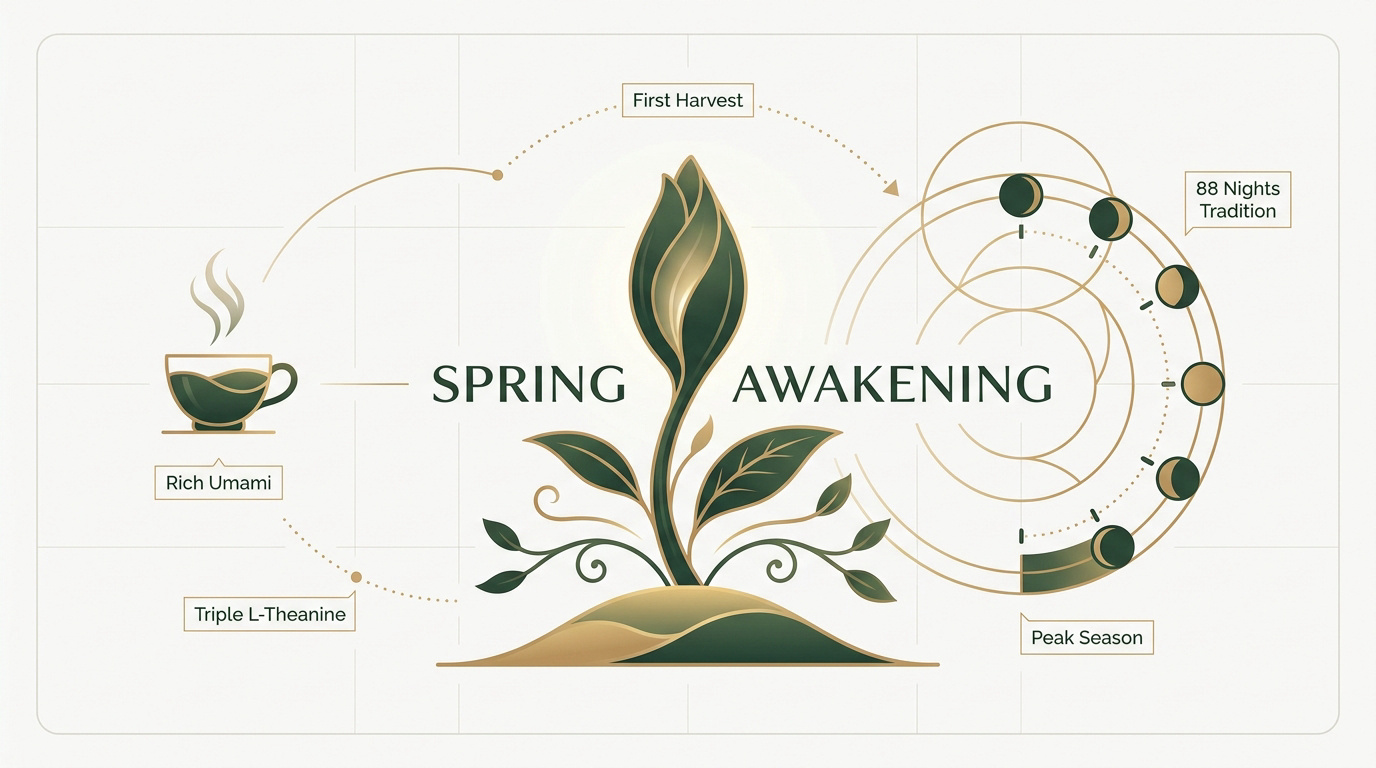
Ichibancha, the first spring harvest, peaks in late April across Shizuoka and Uji. These leaves contain triple the L-theanine of later picks, defining the creamy umami profile of premium Shincha. This seasonal cycle begins precisely eighty-eight nights after the spring equinox, a ritual known as Hachijuhachiya.
The transition from the dormant winter to the vibrant spring energy defines the entire market for The Seasonal Teas of Japan: How Matcha, Shincha and Hōjicha Mark the Year.
Why the first harvest (Ichibancha) dominates the market
Japanese tea follows the lunar calendar closely. The Ichibancha window represents the year’s first picking season. It focuses heavily on the renowned Shizuoka and Uji regions.
Young leaves are highly prized for their nutrient density. They absorb minerals all winter during dormancy. This creates a superior umami flavor that later harvests simply cannot match.
Market prices reflect this quality. Consumers gladly pay a premium for this fleeting freshness.
Shincha vs. regular Sencha: The L-theanine difference
Shincha is the “new tea” of the season. It is processed immediately to lock in volatile oils and a grassy aroma. Standard Sencha is often blended for year-round consistency.
The L-theanine levels are significantly higher in Shincha. This amino acid offers a natural sweetness. It provides a relaxing effect that masks the bitterness found in summer picks.
Availability remains extremely limited. True Shincha usually vanishes from Japanese shelves by early summer.
Hachijuhachiya and the 88th night tradition
The Hachijuhachiya calculation is very specific. It occurs 88 days after Risshun, the start of spring. This date marks the peak time for picking the finest leaves.
Ritual celebrations are common among tea farmers. They offer tea to shrines to ensure success. Drinking tea from this night is said to prevent illness for the year.
This tradition is linked to frost protection. Farmers historically celebrated this date because the danger of late frosts destroying new shoots finally passed.
3 Reasons Why Summer Demands Roasted Hojicha
While spring focuses on delicate sweetness, the rising heat shifts the harvest toward bolder, more resilient leaves that require different handling.
Processing Nibancha to manage high catechin levels
Nibancha is the second harvest occurring in June. Intense sunlight increases catechin production in the leaves. This results in a much sharper, more astringent flavor.
UV rays impact the plants significantly. Shading techniques are often reduced, leading to robust but bitter profiles that need specific processing.
Farmers often turn these leaves into roasted varieties. Roasting masks the harshness.
Roasting science: Why Hojicha suits the humid months
The roasting science involves high temperatures. This process triggers the Maillard reaction, creating pyrazines. These compounds provide a nutty, toasty aroma. Roasting also reduces the tea’s overall moisture sensitivity during Japan’s humid rainy season.
The aromatic profile is unique. The scent is grounding and refreshing despite the heat. It provides a clean finish after heavy summer meals.
Cold-brewing (Mizudashi) for maximum summer refreshment
Mizudashi methods are perfect for summer. Use room temperature or iced water for long extraction. This prevents the bitter tannins from dissolving, keeping the brew smooth.
Consider the reduction of caffeine. Cold water extracts less caffeine than hot water. This makes it perfect for all-day hydration.
Hydration benefits are real. The mineral content in summer tea helps replenish the body during extreme humidity. The Seasonal Teas of Japan: How Matcha, Shincha and Hōjicha Mark the Year offer a perfect rhythm for our health.
How does Autumn Mellow Tea via Kuradashi Aging?
As the humidity breaks, the tea industry looks backward to the spring harvest, which has been quietly transforming in climate-controlled storage.
The Kuradashi method: Storing tea in ceramic jars
Kuradashi involves aging spring tea until autumn. This traditional method uses sealed ceramic jars for stability.
Jars were historically kept in cool mountain storehouses. Modern facilities mimic this to prevent oxidation while allowing flavor maturity.
This rest period is vital. It transforms the sharp edges of the tea into something deeper.
Flavor profiles: How aging rounds out the taste
Aging reduces the “raw” grassiness of spring, perfecting the umami to astringency balance. The resulting liquor is mellow, rich, and full-bodied.
Catechins slightly oxidize, softening the bite on the tongue. This creates a complex, lingering sweetness known as kokumi.
The color darkens slightly. It reflects golden autumn hues.
Pairing robust autumn teas with seasonal ingredients
Pair these teas with Wagashi like chestnut manju or persimmon sweets. The robust tea cuts through the dense sweetness of autumn treats.
Aged teas complement roasted flavors in seasonal cooking. Think of grilled mushrooms or savory rice dishes.
Set up a home gathering. Use warm, earthy ceramics to match the mood.
Winter Rituals and the Intimacy of Matcha
When the first frost arrives, the focus turns inward, moving from the fields to the warmth of the hearth and the concentrated power of powdered tea.
Robiraki and the shift to the sunken hearth
The Robiraki ritual defines the tea practitioner’s winter. This “opening of the hearth” occurs in November. It marks a symbolic transition to the cold season.
The portable summer brazier is stored away. The sunken hearth (ro) is now used to heat the room and water.
This is the “New Year” for tea. It celebrates the aged tea jars.
Preparing Koicha: The ultimate winter tea experience
Koicha (thick tea) differs greatly from Usucha. It uses double the matcha powder and half the water. The result is a viscous, intense green paste. Its high concentration provides a warming sensation perfect for freezing winter nights.
The ceremony is deeply intimate. Guests often share a single bowl of Koicha. This shared experience fosters deep connection during the quiet, dark months.
Managing caffeine and storage for the year-end
Proper storage is vital. Keep delicate spring teas in airtight tins inside the fridge. Ensure they reach room temperature before opening to avoid condensation.
Light and moisture are the enemies of tea leaf longevity. Oxidation quickly turns a vibrant green tea into a dull, flat brew.
Finish your spring stocks now. Make room for the upcoming April harvest.
Embracing seasonal Japanese teas allows you to harmonize with nature’s rhythms, from the L-theanine-rich sweetness of spring Shincha to the warming depth of winter Matcha. Transition your palate now by enjoying roasted Hojicha to beat the summer heat before the mellow Kuradashi jars open this autumn. Elevate your daily ritual by savoring these fleeting flavors before the harvest cycle begins anew.
FAQ
What makes the first spring harvest, or Ichibancha, so special?
Ichibancha, often referred to as Shincha, represents the very first picking of the year, typically occurring between late April and May. These young, tender leaves are highly prized because they have spent the winter dormancy accumulating a vast reserve of nutrients and minerals. This results in a tea that is exceptionally vibrant in color and rich in flavor.
From a health perspective, this harvest is superior due to its high concentration of L-theanine and antioxidants. The flavor profile is defined by an intense, creamy umami and a refreshing sweetness that is much more pronounced than in later harvests, making it the most sought-after tea in regions like Shizuoka and Uji.
How does Shincha differ from standard Sencha regarding L-theanine levels?
The primary distinction lies in the chemical composition driven by the harvest timing. Shincha is harvested at the peak of spring when L-theanine levels, the amino acid responsible for sweetness and relaxation, are at their highest, often containing two to three times the amount found in later picks. Because it is processed and shipped immediately, it also retains volatile aromatic oils that offer a distinctively “grassy” and fresh scent.
Standard Sencha, while delicious, is harvested later in the season (Nibancha or Sanbancha) or blended for year-round consistency. As the tea plants receive more sunlight, the L-theanine is naturally converted into catechins, which increases the tea’s astringency and bitterness. Therefore, Shincha offers a much mellower, sweeter experience compared to the balanced, vegetal bite of regular Sencha.
What is the significance of the Hachijuhachiya tradition in Japan?
Hachijuhachiya, or the “88th Night,” is a traditional milestone that falls exactly 88 days after Risshun (the start of spring). Usually occurring in early May, this date historically signaled to farmers that the risk of late-spring frost had passed, making it the optimal time to begin the delicate tea harvest. It marks the transition from spring to the beginning of summer.
In Japanese culture, the number 88 is considered very lucky. A long-standing folk belief suggests that drinking tea picked on this specific night promotes longevity and protects against illness throughout the coming year. Today, it remains a celebratory period where tea enthusiasts seek out the freshest leaves to honor this seasonal ritual.
Why is roasted Hojicha recommended during the hot summer months?
As temperatures rise in June and July, the second harvest (Nibancha) produces leaves that are more robust and higher in catechins due to intense sunlight. Roasting these leaves at high temperatures transforms them into Hojicha, a process that triggers the Maillard reaction. This creates a nutty, toasty aroma and significantly reduces the tea’s caffeine and tannin content, making it very gentle on the stomach.
Hojicha is particularly refreshing when prepared as Mizudashi (cold-brew). Because cold water extracts fewer bitter components, the result is a smooth, hydrating beverage that helps replenish the body during Japan’s humid summers. Its earthy flavor provides a clean, crisp finish that perfectly complements seasonal meals.
What is the Kuradashi aging method used in autumn?
Kuradashi is a traditional aging process where high-quality spring tea is sealed in ceramic jars and stored in cool environments throughout the summer. Historically, these jars were kept in mountain storehouses to maintain a stable temperature. This period of rest allows the tea to undergo a subtle transformation, mellowing its character before the jars are officially opened in the autumn.
This aging process rounds out the tea’s flavor by reducing the sharp, raw grassiness of the initial harvest. The resulting tea is full-bodied and rich, developing a deep sweetness known as “kokumi.” These matured teas are ideal for the cooler autumn air and pair beautifully with seasonal treats like chestnut manju or savory grilled dishes.
Why is Matcha, specifically Koicha, associated with winter rituals?
Winter in the Japanese tea tradition begins in November with Robiraki, the opening of the sunken hearth (ro). As the focus moves indoors for warmth, Matcha becomes the centerpiece due to its rich, creamy texture and intense umami. Its concentrated nutrients provide a natural energy boost and a warming sensation that is perfect for the colder months.
The most formal winter preparation is Koicha (thick tea), which uses a high ratio of powder to water to create a viscous, vibrant green paste. Sharing a single bowl of Koicha among guests is a deeply intimate ritual that fosters connection and reflection during the quietest time of the year, marking what many consider the “New Year” of the tea world.