
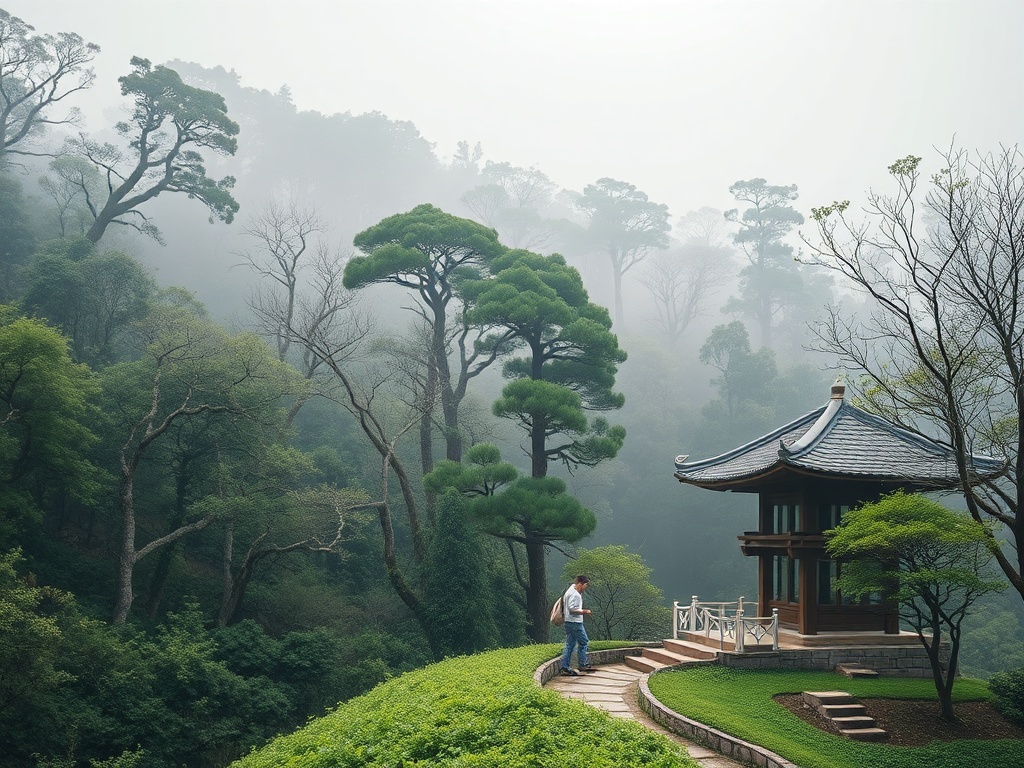
Walking the Ancient Trails of Spiritual Japan
In Japan, pilgrimage is more than a journey—it’s a meditative dialogue between past and present, nature and spirit. Winding through sacred forests and misty mountains, these age-old paths invite travelers to slow down and rediscover a sense of purpose. But what makes these routes truly unique is the unexpected harmony they strike with another iconic element of Japanese culture: green tea.
The Spiritual Roots of Pilgrimage
From the famous Kumano Kodo trails in Wakayama to the Shikoku Henro circuit, pilgrimage has been a cornerstone of Japanese spiritual life for centuries. These routes were originally walked by monks and devotees seeking purification, guided by the serene presence of towering cedars and ancient shrines.
What sets these pilgrimages apart is the reverence for nature. The forest itself becomes a sacred being, a living entity that purifies the soul as much as the rituals performed along the way. This concept, deeply rooted in Shinto beliefs, transforms every step into a spiritual act.
Green Tea: The Companion of the Way
As pilgrims wander these sacred paths, they often find small teahouses nestled in valleys or perched near temple gates. These are more than rest stops—they are cultural sanctuaries where tradition is steeped alongside tea leaves.
Green tea in Japan is not merely a beverage but a philosophy. The act of preparing and drinking tea—known as chanoyu or the Way of Tea—echoes the meditative rhythm of pilgrimage. It invites stillness, gratitude, and connection.
Why Tea and Pilgrimage Belong Together
- Shared values of mindfulness and simplicity
- Each cup becomes a ritual moment of awareness
- Local teas reflect the character of the region, deepening the travel experience
Voices from the Path: Local Perspectives
We spoke with Junko Sakamoto, a teahouse owner along the Nakahechi route of Kumano Kodo. “Pilgrims arrive tired but open-hearted,” she shares. “We serve them yuzu-infused sencha, to warm the body and lift the spirit. The tea connects them to the land.”
Her family has run the teahouse for three generations, adapting their offerings to the seasons and listening to the stories of those who pass through. “Some say the tea is the most spiritual part of their journey,” she smiles.
Modern Reflections on Ancient Paths
Today, these pilgrimage routes attract not only the devout but also urban Japanese and international travelers seeking reconnection. The combination of natural immersion and cultural depth offers a healing contrast to the speed of modern life.
Interestingly, the role of tea has also evolved. Artisanal tea producers in regions like Uji and Shizuoka now collaborate with spiritual retreats and walking tours, offering curated experiences where tea is paired with forest bathing or zazen meditation. These initiatives reflect a growing awareness of how traditional practices can nurture modern well-being.
As noted in a National Geographic exploration of Japanese tea culture, the fusion of tea and nature-based rituals is gaining popularity among those seeking holistic travel experiences.
Planning Your Own Pilgrimage Experience
If you’re inspired to walk these sacred routes, consider these tips to fully embrace the journey:
- Travel slowly – Allow time for unplanned encounters and silent moments
- Support local teahouses – They are keepers of both flavor and history
- Respect the environment – Carry out what you carry in, and tread gently
- Be open to transformation – The path may change you in unexpected ways
Choosing a route and getting to the trailhead
The Nakahechi is the friendliest introduction. Take the JR Kisei line to Kii-Tanabe, about two hours from Osaka’s Tennoji or Shin-Osaka stations, then the Ryujin bus for 40 minutes to Takijiri-oji, where the forest climb begins. Most walkers spend three to four days reaching Kumano Hongu Taisha, sleeping at Takahara, Chikatsuyu and Yunomine Onsen. The Tanabe City Kumano Tourism Bureau runs an English booking service and a luggage shuttle, and a minshuku with two meals costs roughly 9,000 to 15,000 yen per night. Spring and autumn are the best seasons; the June rainy season brings leeches to the lower forest, and August heat makes the exposed sections hard work.
For more silence, the Kohechi links Koyasan to Hongu in four demanding days over three passes above 1,000 metres, and the Iseji route on the Mie side threads stone-paved passes such as Magose-toge between Ise and Kumano. Koyasan itself is reached by the Nankai Koya line from Osaka’s Namba to Gokurakubashi and a cable car; the Choishi-michi pilgrim path from Kudoyama climbs 20 kilometres past 180 stone markers in six to seven hours, and a night in a temple lodging with a vegetarian shojin dinner runs 12,000 to 20,000 yen.
Tea along the way and how to receive it
Mie Prefecture, which the Iseji crosses, is Japan’s third-largest tea producer, and Ise-cha, a deep-steamed sencha, is what the local shops and stations pour. Around Hongu and Yunomine the pilgrim’s tea is more often bancha or roasted hojicha, low in caffeine and easy on an empty stomach after a long climb. Along the Kii peninsula you will also meet chagayu, rice porridge cooked in bancha, on breakfast tables; it has been pilgrim food here for centuries. The Kumano Hongu Heritage Center beside the shrine is a good place to rest, refill water and ask about trail conditions.
Teahouse etiquette on a pilgrim road is undemanding. Leave your pack outside or by the door, say a word of greeting, and if tea is offered without charge, drink it, thank the host and buy something small rather than tipping. Carry 1.5 to 2 litres of water; springs marked on the maps dry up in summer and the intervals between settlements can reach five hours. If you plan to whisk your own bowl at a pass, Uji on the JR Nara line and the Wazuka valley beyond Kamo station are the natural places to buy matcha on the way south, and a 20-gram tin covers a week of trail mornings.
In the Footsteps of Stillness
To walk a Japanese pilgrimage trail is to invite stillness into your life. To sip green tea along the way is to anchor that stillness in ritual and taste. Together, these elements create a profound journey—not just across mountains, but into the heart of Japan itself.
In the hush of the forest and the warmth of the teacup, ancient wisdom awaits.