
Uji and Shizuoka get most of the attention. Japanese tea is grown in many other places, though. This guide shows you where to look, what changes from one region to the next, and how the harvest calendar shapes what ends up in your cup.
- Several lesser-known areas, from Nara to Kyushu, make distinctive tea.
- Harvest timing and shading change flavour as much as geography does.
- Steaming terms on the label tell you what to expect before you brew.
Why does Japanese tea taste different from region to region?
The tea plant is the same almost everywhere. It is Camellia sinensis. The differences come from what happens around it.
Growing conditions matter. So do the cultivar, the horticultural methods, the processing and the time of harvest.
Climate is part of the picture too. Uji is known for sandy soils and mountain slopes. Warm days and mild cooling at night help shape its flavour.
Here is a simple way to read any tea region:
- Look at the climate and the landscape.
- Check which teas the area is known for.
- Ask how the leaves are shaded, steamed or roasted.
Tea is also grown across almost the whole country. Hokkaido is the exception.
Which regions sit beyond the two big names?
Shizuoka is the largest producing region. It supplies about half of Japan’s tea. Its speciality is sencha, but it makes many kinds.
Kyoto is the other well-known name. It is famous for matcha and gyokuro.
Now look past them.
Nara and the Yamato Plateau
Tea here grows mainly on the Yamato Plateau. The altitude runs between 200 m and 500 m. The area is less famous than other regions. It mostly makes sencha, bancha and kabusecha.
Kyushu and Miyazaki
Kyushu has four famous tea regions: Kagoshima, Saga, Miyazaki and Fukuoka. The climate is subtropical. Farmers grow sencha, bancha, kukicha, kabusecha and gyokuro there. Kamairicha is the local speciality.
Miyazaki and Kumamoto are called up-and-coming. They make small quantities of high-quality tea.
Aichi and Mie
Aichi sits on the southern coast of Honshu. It produces less tea in total than Mie or Shizuoka. It still matters, especially for matcha.
Mie is one of the main producing regions, along with Shizuoka and Kagoshima.
How does altitude fit into the story?
Altitude is one clue to a tea’s character. The sources give a firm figure only for the Yamato Plateau. There, gardens sit between 200 m and 500 m.
Treat altitude as a starting point, not a verdict. Shading, steaming and harvest date all change the result.
When you compare two teas, ask a few questions:
- Where was it grown?
- Was it shaded before harvest?
- How long was it steamed?
- When was it picked?
Those answers say more than a single number does.
What does the harvest calendar change?
Timing shapes the cup. The first tea of the season is shincha. It means “new tea”. It is harvested between early April and late May.
Shincha is prized for its sweet, grassy flavour. It also has a high theanine content, which gives it a full-bodied sweetness.
Freshness is the point of shincha. It is processed, packaged and shipped quickly after picking. Most other steamed teas go through blending first. A tea master blends them to keep the taste consistent from year to year.
The aroma of shincha can change from year to year. It follows the conditions of that season.
Later harvests taste different. Bancha is made from the larger, coarser leaves. Its summer version, kariban, uses the third and fourth flushes. It has a robust flavour and a yellowish colour.
Roasting adds another layer. Hojicha is pan-roasted rather than steamed. The roasting removes much of the caffeine. It tastes mild and warm.
How do shading and steaming change the flavour?
Shading is a major tool. Gyokuro leaves are shaded for about three weeks before harvest. That raises amino acids and chlorophyll. The result is a distinct umami flavour and a bright green colour.
Kabusecha is the middle path. It is shaded for a much shorter time, typically 7 to 10 days. It combines gyokuro’s buttery complexity with the refreshing astringency of sencha.
Steaming is the other lever. Nearly all Japanese tea is green tea. The leaves are steamed rather than pan-heated. You will see three terms on labels:
- Asamushi: lightly steamed, usually 20 to 40 seconds.
- Chumushi: medium steamed, 40 to 80 seconds.
- Fukamushi: deeply steamed, 80 seconds or more.
The exact time varies from farmer to farmer. That is why the labels use words and not exact figures.
Shading and steaming give you a vocabulary for taste. Umami points to shaded leaves. Astringency points to sun-grown leaves. Sencha grown in full sunlight tastes more bitter than shaded tea.
How can you find small-batch teas?
Start with the label. Look for the region, the tea type and the steaming level. A single-region tea tells you more than a generic blend.
Know what to expect from blends. Most sencha is not single estate. A tea master blends it for consistency. That is fine for daily drinking. It is less useful if you want to taste a place.
Buy shincha with its short shelf life in mind. Its whole appeal is freshness, so check the harvest date.
If you travel, pick one region and go deep. Visit a single area instead of rushing between several. Ask local shops what they pour for themselves.
Brew with care at home. Higher-quality teas are usually steeped cooler and shorter, often more than once. Too much heat or time makes the tea bitter and astringent.
Frequently asked questions
Is Uji really the oldest tea region in Japan?
Uji is called the birthplace of Japanese green tea. Its tea has been grown for many centuries. Kyoto is also named as one of the original places where Eisai first planted tea.
When is the first harvest of the year?
Shincha, the first tea of the season, is harvested between early April and late May. It is made for freshness. It is packed and shipped quickly after picking.
What does deep steamed mean on a label?
Fukamushi means the leaves were steamed for 80 seconds or more. Asamushi is a lighter steaming of about 20 to 40 seconds. Exact times vary by farmer.
Which Japanese teas are least bitter?
Shaded teas such as gyokuro are known for a sweet, smooth flavour with umami. Sun-grown sencha is more bitter. Brewing cooler and shorter also helps keep bitterness down.
Related reading
- Brewing Harmony: How Ancient Japanese Tea Codes Influence Modern Work & Social Life
- How Tea Ceremony Values Inspire Mindful Living in Cities
Sources
- 23 Types of Japanese Teas (Not Just Green Tea) (teasenz.eu, accessed 2026-11-09)
- Japanese Tea: Discover the Most Popular Types (senchateabar.com, accessed 2026-11-09)
- Japanese Tea – Tea History in Japan (valleyoftea.com, accessed 2026-11-09)
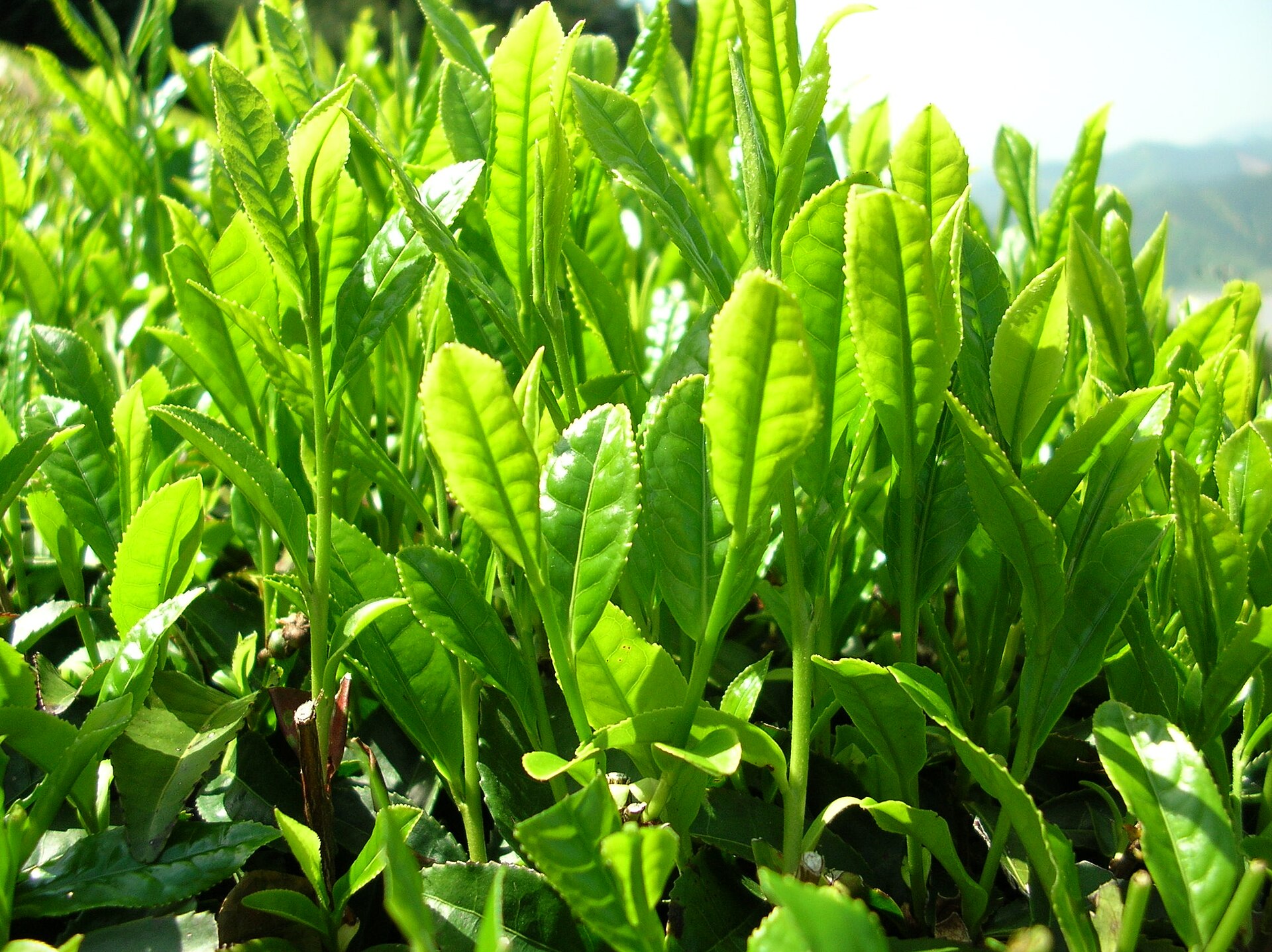
Photo: Green tea leaves, by たね, CC BY-SA 3.0 (Wikimedia Commons)