
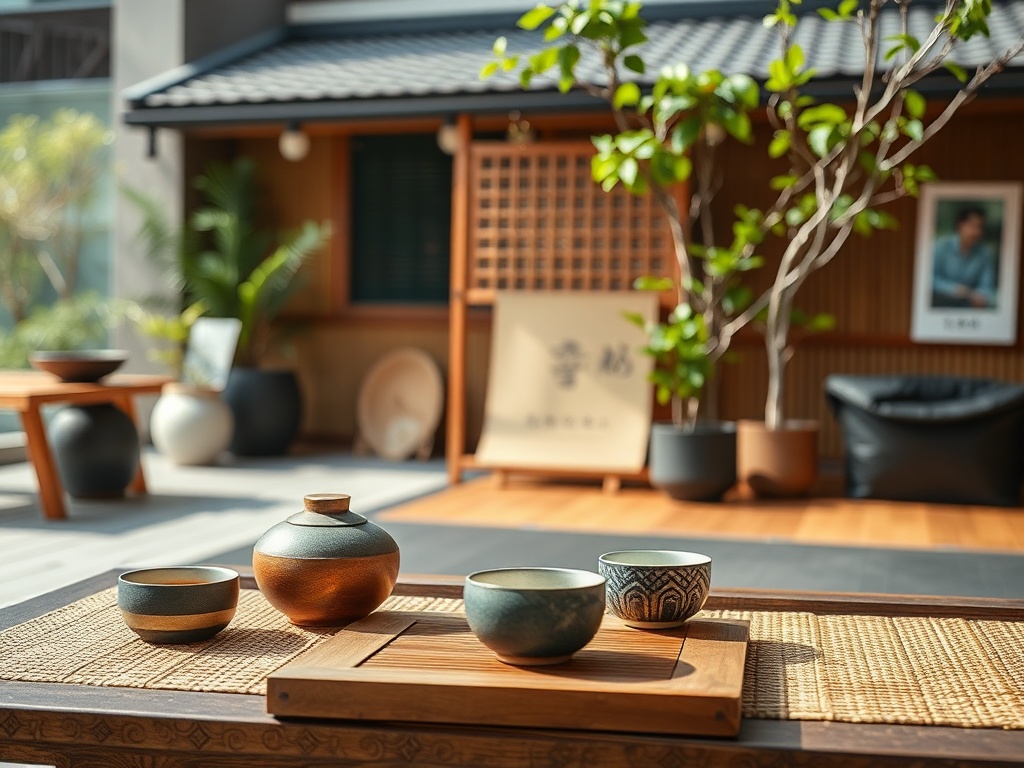
Urban Tea Ceremonies: A New Chapter in Ancient Tradition
In the heart of Tokyo’s bustling neighborhoods and Kyoto’s modern cafés, a quiet revolution is taking place. The traditional Japanese tea ceremony, or chanoyu, is being reimagined by a new generation of urban practitioners embracing **minimalism** — not just as an aesthetic, but as a way of life.
This shift is more than stylistic. It reflects a deep philosophical alignment with the core principles of tea: simplicity, harmony, respect, and tranquility. As modern spaces shrink and schedules tighten, tea enthusiasts are turning toward **compact, purposeful gear** that honors tradition without overwhelming it.
Essentials Over Excess: What Urban Tea Practitioners Choose
Rather than elaborate lacquered boxes or ornate iron kettles, city-based tea practitioners often opt for a minimalist toolkit. The idea is not to dilute the ritual, but to distill it.
- Travel-size iron kettles (tetsubin): Crafted in lightweight steel or ceramic, perfect for compact apartments.
- Folding tatami mats: Offering the texture of tradition while being easy to store.
- Single-purpose chawan (tea bowls): Often handmade, with irregular glazes and forms that reflect wabi-sabi.
- Portable chasen (bamboo whisk): Protected in slim wooden cases for safekeeping.
Each item is chosen with care, often sourced from local artisans or inherited from previous generations. These choices speak to the **intentionality** behind every movement in the tea ceremony.
The Influence of Wabi-Sabi and Zen Aesthetics
Minimalist tea gear is deeply influenced by the aesthetic philosophy of wabi-sabi, which celebrates imperfection, transience, and the beauty of the understated. In urban spaces where concrete and neon dominate, the tactile presence of a simple clay bowl or a weathered furo (portable brazier) becomes a quiet act of resistance.
According to a Britannica article on wabi-sabi, this mindset is rooted in Zen Buddhism, which encourages living in the present and finding depth in simplicity. For modern tea practitioners, this means embracing tools that are not only functional but also spiritually resonant.
Voices from the Tatami: Insights from Modern Practitioners
We spoke with Yukiko Tanaka, a Tokyo-based tea artist, who hosts weekly gatherings in her 2LDK apartment. “I don’t need a full tearoom to create a moment of peace,” she explains. “A single bowl, a bamboo whisk, and hot water — these are enough. The ritual is in the heart, not the space.”
Similarly, designer and tea enthusiast Ryo Nakamura has developed a line of multipurpose tea gear inspired by traditional forms but made with recycled materials. “My goal is to make tea accessible without losing its soul,” he says. His work has been featured in exhibitions on sustainable design, including one by the National Geographic on sustainable design.
Why Less Is Truly More
Minimalism in tea practice is not about deprivation — it’s about **refinement**. It’s a conscious effort to remove the unnecessary so that the essential shines more brightly. In a city where distractions are endless, a modest tea setup becomes a sanctuary.
More importantly, this approach democratizes the tea ceremony. Without the need for elaborate equipment or specialized rooms, more people — especially younger generations — are finding ways to integrate tea into their daily lives.
Conclusion: A Quiet Return to Meaning
As Japan continues to evolve, so too does its cultural heritage. The minimalist approach to urban tea practice is not a rejection of tradition, but a **creative reinterpretation** that keeps its spirit alive. Through fewer tools and deeper intention, today’s practitioners are writing a new chapter in the story of Japanese tea — one that honors the past while embracing the present.