
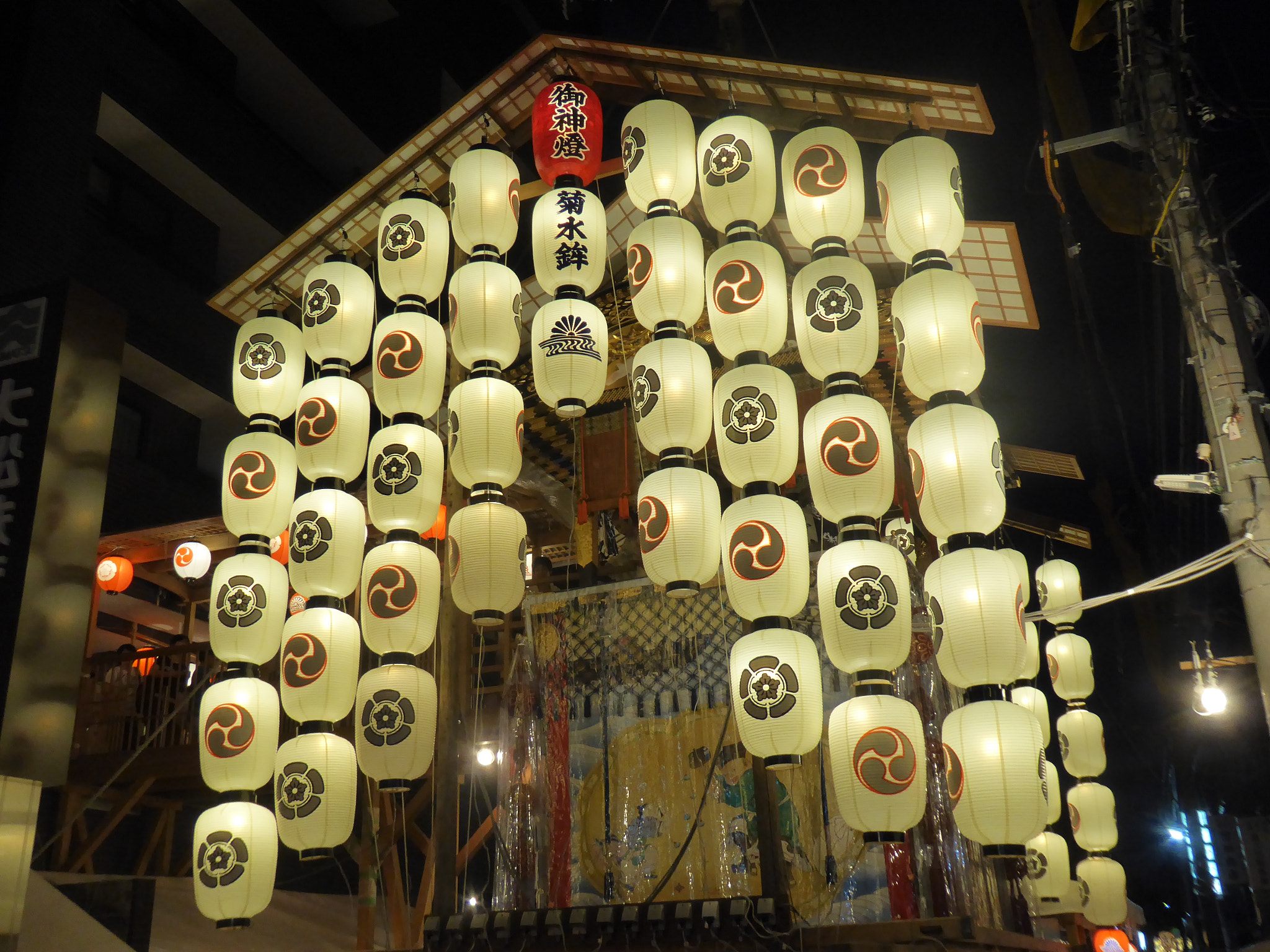
Japan has a festival almost every day of the year, somewhere. Some are tiny shrine rituals. Others stop whole cities. This guide explains what a matsuri is, which ones are best known, and how to approach them as a visitor.
- Matsuri are tied to the kami, to the farming year and to local communities.
- The best-known festivals draw crowds from hundreds of thousands to over two million.
- Dates vary by area, and rooms for the major events fill up far ahead.
What is a matsuri, and why does Japan have so many?
Matsuri is the Japanese word for a festival or holiday. Most are sponsored by a local shrine or temple. Some are secular.
The word is linked to the kami, the Shinto deities. One popular theory says it comes from a verb meaning to obey the kami. Other theories point to waiting for the kami to descend, or to making offerings to them.
The numbers are large. Estimates put the total at hundreds of thousands of festivals across the country. Their yearly economic impact is believed to run into the hundreds of billions of yen.
Many matsuri follow the same basic pattern. You will usually find:
- One central event, such as a procession, a ritual or a contest
- Food stalls
- Music and dance
- Games and other entertainment
Some festivals revolve around fireworks. Others centre on a shrine or temple. A few are built around contests where participants wear loincloths.
Which festivals are the most famous?
Three festivals are counted as the great urban matsuri of Japan. They are Gion Matsuri, Tenjin Matsuri and Kanda Matsuri. Each is held in a city. Each draws hundreds of thousands to over a million spectators a year.
Gion Matsuri is the best known. It is the most famous of all Japan’s festivals and dates back to 898. Crowds come for the procession of huge floats and portable shrines.
Two regional festivals rival it. The Aomori Nebuta Matsuri draws more than 2 million visitors a year. The Tokushima Awa Odori draws more than 1 million. A 2022 survey ranked them first and second for recognition in Japan. Gion Matsuri came third.
Modern festivals count too. The Sapporo Snow Festival attracted 2.73 million visitors in 2019.
Here are the big names at a glance:
- Gion Matsuri in Kyoto: huge floats and portable shrines
- Aomori Nebuta Matsuri: giant illuminated floats in August
- Awa Odori in Tokushima: a boisterous summer dance festival
- Sapporo Snow Festival: huge snow sculptures
- Takayama Spring and Autumn Festivals: held in mid-April and mid-October
What makes the Kyoto festivals special?
Kyoto is counted as home to three major festivals. They are Gion Matsuri, Aoi Matsuri and Jidai Matsuri. Each has a different character.
Gion Matsuri is about scale. Enormous floats and portable shrines roll through the streets.
Aoi Matsuri and Jidai Matsuri are about costume. Crowds gather to watch people dressed in period clothing walk in procession.
Aoi Matsuri is a stately procession of Kyotoites and animals. It re-enacts the delivery of the Emperor’s message to two of the city’s most important shrines.
Jidai Matsuri is held in October. Citizens in period costume parade through the city and reflect its long history.
Kyoto also marks Obon in summer. The festival ends with giant bonfires lit to guide the ancestors back to the spirit world.
How do festivals connect to rice, harvest and the seasons?
Many matsuri exist to ask the kami for a good harvest of rice and other crops. Each season has its own ceremonies.
The general pattern is simple:
- Spring festivals pray for a good harvest for the year.
- Summer festivals pray that crops stay free from pests and storm damage.
- Autumn festivals give thanks for the harvest.
- Winter festivals pray for a good harvest in the new year.
The rituals can be vivid. At rice-planting festivals, young women called saotome enter the paddy to plant seedlings. In summer, torches are lit at night. Straw dolls carrying pests are floated or thrown into the river.
In autumn, farmers in rural villages thank the kami of the rice fields. They then send the kami back to the mountains. In winter, New Year decorations are burned and mochi is roasted over the flames.
Almost every locale has at least one matsuri in late summer or early autumn. It is usually tied to the paddy harvest.
If you follow tea culture, this seasonal logic will feel familiar. The same agricultural calendar shapes the tea year. This guide does not cover specific tea activities at festivals, so check each event’s local programme.
What will you find at a festival?
Expect food first. Yatai food stalls appear at every festival, even the tiniest local one. They sell everything from chocolate-covered bananas to octopus balls.
Beyond food, festivals offer a chance to see Japan at play. Many people wear kimono. Traditional dances are performed. Beer and sake flow freely.
Festivals also reflect Japanese belief in a wider sense. People worship the spirits in all things and the souls of their ancestors. They also revere fearsome vengeful spirits and violent kami. These beings are believed to protect people from epidemics and natural disasters.
UNESCO recognition shows how much of this is performance heritage. A significant number of festivals are registered as float festivals in Japan under UNESCO’s Intangible Cultural Heritage lists. Dozens of folk dances and costume processions are also listed.
Here is what to watch for:
- Processions of floats or portable shrines
- Dances, including bon odori
- Costume parades
- Fireworks
- Food stalls
You do not need to speak Japanese to enjoy any of it.
How should you plan a festival trip?
Start with the calendar. There are no fixed matsuri days for all of Japan. Dates vary from area to area. They tend to cluster around traditional holidays such as Setsubun and Obon.
Book early for the big events. Accommodation for the major festivals can be booked up a year in advance.
You can also go the other way. Check which smaller events coincide with your trip. Then go along and enjoy the surprise.
A few habits help:
- Check the local date before you book anything.
- Expect large crowds at the famous events.
- Arrive early if you want a view of a procession.
- Bring cash for food stalls.
- Talk to locals. Festivals are a good chance to meet people.
Treat shrine and temple grounds with respect. Many festivals are religious events first.
Frequently asked questions
What is the difference between a matsuri and a regular holiday?
Matsuri is the Japanese word for both a festival and a holiday. Most are sponsored by a local shrine or temple. Some are secular, such as the Sapporo Snow Festival.
Which Japanese festival is the most famous?
Gion Matsuri is described as the most famous of all Japan’s festivals. It dates back to 898. A 2022 survey ranked Aomori Nebuta first and Awa Odori second for recognition, with Gion Matsuri third.
Do you need to book ahead for festivals?
For the major festivals, yes. Accommodation can be booked up a year in advance. For smaller local events, you can simply check what is on during your trip.
Related reading
- How seasonal japanese teas define the rhythm of the year
- The Art of Silence: Finding Inner Balance Through Japanese Tea Ceremonies
Sources
- Japanese Festivals & Events 2027/2028 (insidejapantours.com, accessed 2026-11-04)
- Japanese festivals — Wikipédia (en.wikipedia.org, accessed 2026-11-04)
Photo: <div class=’fn’> Gion Matsuri Kyoto</div>, by Mikel Santamaria, CC BY 3.0 (Wikimedia, via Openverse)