
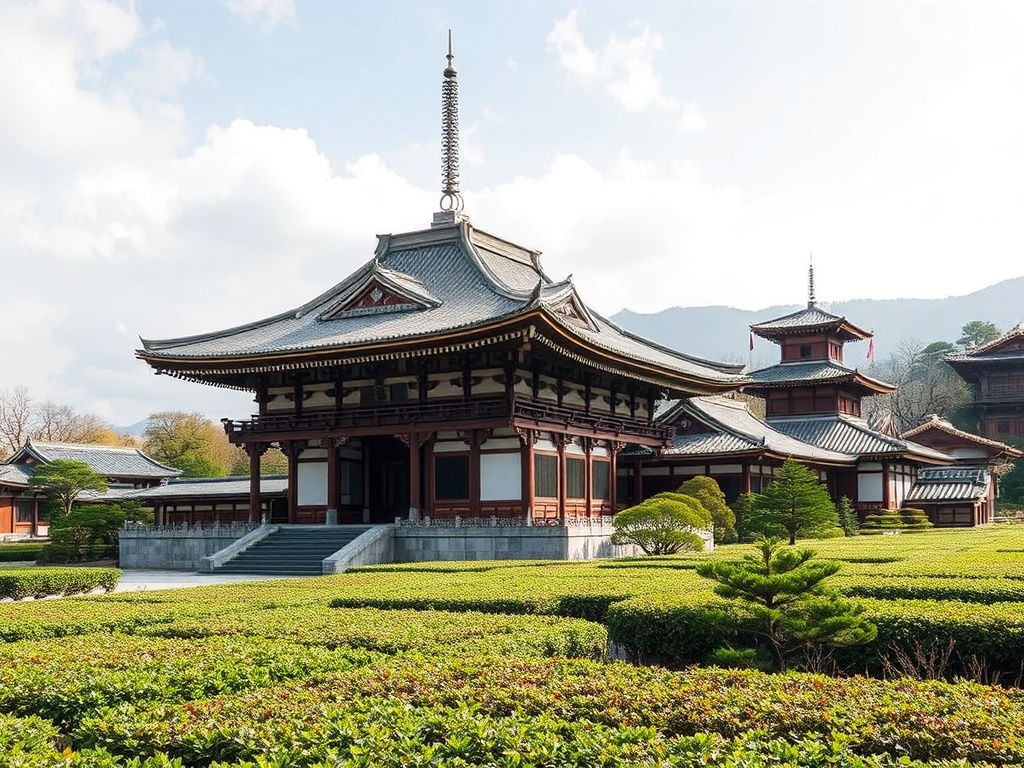
Ancient Roots in a Timeless Landscape
Surrounded by sacred mountains and centuries-old shrines, the region around Nara is not only a spiritual heartland of Japan but also a cradle for one of its most cherished cultural rituals: the tea ceremony. Long before Kyoto rose as the capital of refined tea culture, the rolling hills near Nara were already nurturing the leaves that would shape a national tradition.
The Cradle of Yamato Tea
Just east of Nara lies Yamato Kōgen, a highland plateau where misty mornings and mineral-rich soil create the perfect terroir for cultivating high-grade green tea. This region, often overlooked by tourists, produces some of the oldest teas in Japan. Local growers still use ancestral techniques to hand-pick and steam the leaves, preserving the delicate umami profile that defines Yamato tea.
According to Britannica, tea was introduced to Japan by Buddhist monks in the 9th century, and regions like Nara played a vital role in its early dissemination through monastic communities.
Tea and Temples: A Symbiotic Relationship
In Nara, the connection between spiritual practice and tea cultivation is deeply interwoven. Temples such as Tōdai-ji and Kōfuku-ji once functioned not only as religious sanctuaries but also as centers of agricultural knowledge. Monks cultivated tea both for meditation and medicinal use, aligning with the Zen principle of mindfulness.
Today, some smaller temples in the region still grow their own tea in modest plots, offering visitors a rare glimpse into this sacred agricultural heritage.
Modern Echoes of Ancient Practices
Although urban life has reshaped much of Japan, the tea culture near Nara remains strikingly intact. In the town of Wazuka, less than an hour’s drive from Nara, multi-generational tea families continue to host seasonal tastings and guided walks through the tea fields. These experiences are designed not just to promote tourism, but to pass down stories, techniques, and philosophies born from centuries of devotion.
As highlighted by National Geographic, the tea ceremony in Japan is not merely a beverage ritual — it is a living art form that reflects harmony, respect, and tranquility, values rooted in both Buddhist teachings and rural tradition.
Voices from the Fields
We spoke with Mr. Kunitake, a 76-year-old tea artisan from Uda, who still hand-roasts his leaves in clay pots passed down from his grandfather.
“People think tea is about taste,” he says, “but for us, tea is about rhythm — the rhythm of rain, of harvest, of breath.”
His sentiment echoes a broader philosophy held by local producers: that tea is not a product, but a relationship with nature.
Walking the Sacred Trails of Tea
For travelers seeking a deeper connection with Japan’s cultural roots, walking the trails between Nara and the Yamato tea fields offers an experience that is both meditative and enriching. The Yamanobe-no-Michi, considered Japan’s oldest road, winds past shrines, burial mounds, and tea farms, creating a natural narrative that spans millennia.
Many of these paths have been preserved not only for their historical value but also for their ecological significance. According to the UNESCO World Heritage Centre, the region’s sacred sites and pilgrimage routes are recognized for their cultural and environmental importance.
Walking the Yamanobe-no-michi in a day
The classic section of Japan’s oldest road runs about 16 kilometres between Tenri and Sakurai, both on the JR Sakurai Line, roughly 30 minutes from JR Nara station. Start at Isonokami Jingu, ten minutes on foot from Tenri station, and walk south past Chogaku-ji temple, the great keyhole tombs of the early emperors and the persimmon and mikan orchards that feed the honesty stalls along the way; a bag of fruit costs 100 to 200 yen. The path ends at Omiwa Shrine, whose sacred object is Mount Miwa itself, a short walk from JR Miwa station if you want to finish there rather than continue to Sakurai. Allow five to six hours with stops, carry water, and expect mud after rain; the route is well signed in Japanese and English.
Spring and late autumn are the best walking months. Persimmons colour the orchards from late October, and the maples at Chogaku-ji peak in mid to late November.
Into the Yamato tea highlands
The Yamato Kogen is served by buses rather than trains, so check timetables before setting out. Tsukigase, north-east of Nara city, combines tea terraces with one of the oldest plum groves in Japan, and buses run from JR and Kintetsu Nara stations during the plum festival in late February and March. Yamazoe village, further east, hosts the Nara prefectural Yamato tea research centre and some of the highest fields in the region, reached by bus from Tenri or from Nabari on the Kintetsu Osaka Line. In Uda, the temple Butsuryu-ji near Haibara station claims to be where Kukai planted the first tea seeds brought back from China in the ninth century, and keeps a stone tea mortar said to date from that era; the story is tradition rather than documented fact.
Back in Nara city, Saidai-ji temple holds its Ochamori ceremony in mid January, April and October, where tea is whisked in bowls the size of basins and passed to guests who lift them with both arms; tickets are sold on the day for a few thousand yen and include the tea and a sweet. Farm visits in Yamazoe and Tsukigase are typically 1,500 to 3,000 yen and need booking through the local tourism offices, and the tea rooms attached to Nara’s gardens serve the local Yamato tea for 500 to 900 yen a bowl.
Why Tea Matters Today
In a world increasingly defined by speed and digital distraction, the deliberate pace of Japanese tea culture offers a counterpoint — a space to reflect, breathe, and connect. Whether sipped in a tatami-matted room overlooking moss-covered stones, or under a persimmon tree in a Nara valley, tea becomes a bridge between past and present, between human and land.
- Yamato tea is among the oldest in Japan, predating many Kyoto traditions.
- Tea cultivation in Nara is often intertwined with temple heritage.
- Modern producers integrate storytelling and sustainability into their craft.
Ultimately, the sacred landscapes around Nara do more than grow tea — they cultivate a way of life. One cup at a time.