
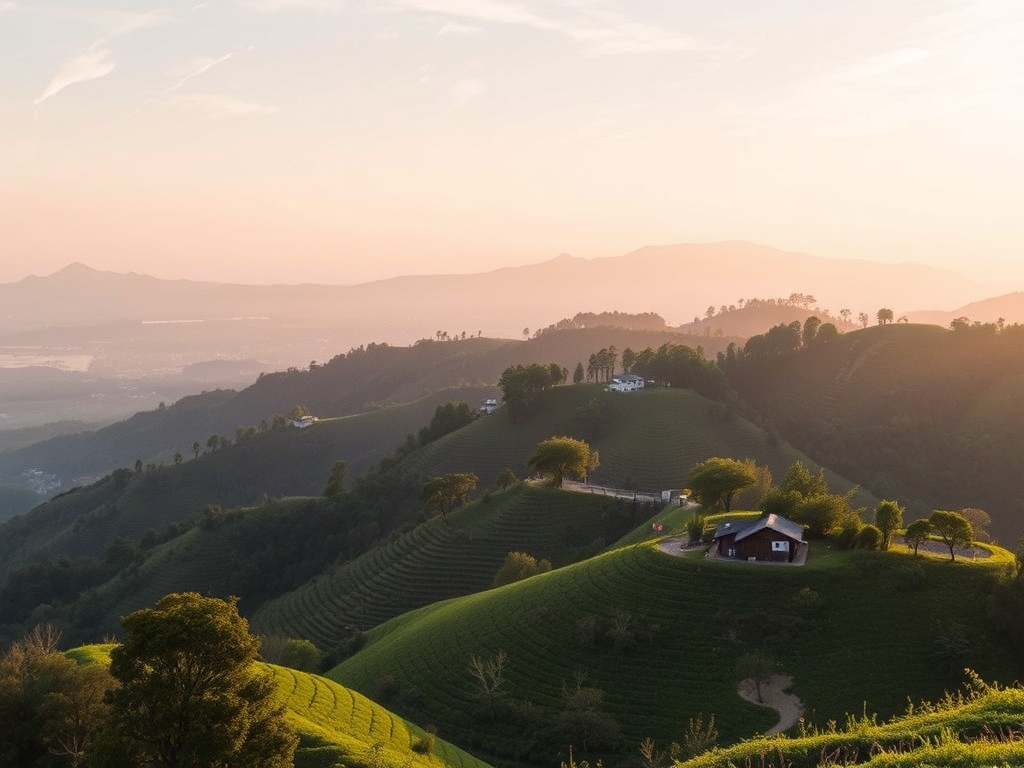
Immersed in the Mist: Where Tea Meets the Mountains
In the heart of Kyushu’s highlands, nestled among rolling hills and misty ridges, lie the ancient tea valleys of Japan. These remote regions are not only breathtaking in their natural beauty but also hold centuries of tradition that continue to shape the Japanese way of life. Exploring these valleys is like stepping into a painting where every leaf, stone, and stream whispers stories of harmony, patience, and reverence for nature.
The Spirit of the Highlands
Kyushu’s highland regions—such as Yame, Ureshino, and Chiran—are renowned for producing some of the finest green teas in Japan. The unique combination of altitude, morning fog, and mineral-rich soil creates ideal conditions for cultivating flavorful and aromatic tea leaves.
Walking through these scenic landscapes, one is struck not just by the beauty of the terrain but by the serenity that envelops it. Local farmers often describe their work as a spiritual practice, aligning with the rhythms of the earth and the seasons. The tea culture here is more than a beverage—it’s a ritual, a connection to ancestry, and a celebration of impermanence.
Traditions Rooted in Nature
Many of Kyushu’s tea-growing communities have preserved customs that date back hundreds of years. Among them:
- Hand-picking rituals performed during the first flush of the year (shincha), often accompanied by blessings for a good harvest.
- Seasonal tea ceremonies held outdoors, where participants sit beneath cherry blossoms or maple trees to drink freshly steeped sencha.
- Tea drying on bamboo racks under the sun, a method that enhances natural sweetness and reflects age-old techniques.
These practices are not just maintained out of nostalgia—they are living expressions of a philosophy that sees tea as a bridge between people and the natural world.
Stories from the Valleys: Voices of the Tea Masters
During a recent visit to Yame, we spoke with Master Hiroshi Tanaka, a seventh-generation tea grower whose family has cultivated gyokuro on the same slopes for over 150 years. “The mountains teach us everything,” he said. “When to pick, how to stir, when to rest. We just follow what nature tells us.”
He explained how fog from the nearby rivers blankets the valley each morning, protecting the delicate leaves from harsh sunlight and allowing the umami-rich flavors to develop fully. According to him, “The true taste of tea is the taste of the land.”
Modern Life, Ancient Wisdom
Despite Japan’s rapid modernization, the values embedded in tea culture continue to influence daily life. In urban cafés and corporate tea rooms alike, the act of preparing and drinking tea remains a moment of pause—a chance to reconnect with nature even in the midst of city life.
The aesthetics of wabi-sabi, the appreciation of imperfection and transience, are deeply rooted in tea traditions and now inform everything from architecture to mindfulness practices in Japan. As highlighted by National Geographic, the tea ceremony is not just a cultural performance but a profound spiritual expression that continues to evolve.
Kyushu’s Valleys as Living Classrooms
Several programs now invite visitors to immerse themselves in the world of tea harvesting and preparation. From guided hikes through terraced plantations to hands-on workshops with local artisans, these experiences offer a rare glimpse into the delicate balance between tradition and innovation.
For those interested in the deeper ecological and cultural context, the University of Tokyo’s research on tea ecosystems reveals how biodiversity and sustainable practices are essential to preserving both the environment and the heritage of Kyushu’s tea valleys.
Getting to the Kyushu tea valleys by train and bus
The three growing areas named above sit in three different prefectures, so plan them as separate day trips rather than one loop. Yame is reached from Fukuoka by the JR Kagoshima Main Line to Kurume, then a Nishitetsu bus of roughly 40 minutes to Yame city; the high tea villages of Hoshino and Kurogi need a further bus or a rental car, and the Hoshino tea culture hall serves the local gyokuro in the traditional way. Ureshino has had its own station on the Nishi Kyushu Shinkansen since 2022, with Ureshino Onsen about 30 minutes from Takeo or Nagasaki; the tea fields begin within a short taxi ride of the hot-spring town, and the shops sell tamaryokucha, the curled tea unique to this district.
Chiran lies on the Satsuma peninsula, about 75 minutes by bus from Kagoshima-Chuo station, and the tea fields there stretch flat under Sakurajima’s ash-grey sky. Kagoshima is now Japan’s second largest tea producer after Shizuoka, and its harvest is the earliest in the country: the first leaves are picked in early April, a good two weeks ahead of Uji or Shizuoka. The Kagoshima prefectural agricultural research institute runs the tea division that developed several of the cultivars now grown across Kyushu.
When to walk and what to budget
Shincha season, from mid April to late May, is the most rewarding time on foot: the rows turn a bright yellow-green and the drying factories fill the valleys with a warm, grassy smell. Summer is hot and humid at low altitude, so save July and August for the higher ground around Aso in Kumamoto, where the JR Hohi Line delivers you to grassland walks at 500 to 900 metres. Autumn brings the second and third harvests and clearer light, while winter shows the fields under frost fans and, in Yame, the black shade cloth going up for gyokuro from late March.
Costs stay modest. A farm tour with picking and a tasting typically runs 1,500 to 3,500 yen per person, a proper gyokuro tasting in a tea room 800 to 1,500 yen, and local buses 300 to 1,200 yen a ride. Book farm visits at least a few days ahead, since most are run by working families who cannot host during peak picking days. Never enter a field without an invitation: the terraces are private land and the plants bruise easily.
Conclusion: A Journey Worth Taking
Exploring the scenic tea valleys of Kyushu is more than a visual or gustatory delight—it’s a journey into the soul of Japanese culture. These highlands are not just places of beauty, but sanctuaries of wisdom and continuity. Whether you’re sipping gyokuro under a maple tree or listening to the rhythm of bamboo leaves in the mountain breeze, you’ll find yourself part of a story that has been unfolding for centuries.
Tea and nature in Kyushu are inseparable. Together, they form a language of harmony that speaks softly but powerfully, inviting us to slow down, breathe deeply, and listen.