
Wabi sabi is a Japanese way of seeing beauty in things that are imperfect, changing and incomplete. The tea ceremony is where this idea becomes visible. This guide explains the term, its two halves, and how it lives in the tea room.
- Wabi sabi finds beauty in imperfection, impermanence and simplicity.
- Wabi points to stripped-back simplicity. Sabi points to the value of age and wear.
- Tea masters such as Murata Juko and Sen no Rikyu pushed tea toward rough, plain objects.
What does wabi sabi mean?
Wabi sabi is a quiet aesthetic philosophy. It places beauty in things that are not perfect. It also values restraint over show.
A common summary describes it as beauty that is imperfect, impermanent and incomplete. Another way to put it: nothing lasts, nothing is finished, and nothing is perfect.
The idea has Buddhist roots. It draws on the teaching of impermanence, one of the three marks of existence. That is why the mood of wabi sabi is calm rather than sad.
Its traits are easy to list:
- Asymmetry
- Roughness
- Simplicity
- Modesty
- Intimacy
- Respect for natural materials and the forces of nature
Wood, stone and natural fibers appear again and again. Ornament and artificial polish do not.
What is the difference between wabi and sabi?
The two words work as a pair. Each carries its own shade of meaning.
Wabi: what remains when excess is removed
Wabi is the beauty that appears once showy decoration is stripped away. Picture a single tea bowl whose earthy texture is plainly visible. The object shows its true nature. Older uses of the word pointed to the simplicity, and even the loneliness, of living close to nature.
Sabi: the value that time adds
Sabi reads change over time as value, not decay. Think of grain showing on aged temple pillars, rust-tinged metal fittings, or stone lanterns covered in moss. Each one carries the years inside it.
One scholarly source renders wabi as subdued, austere beauty and sabi as rustic patina. There is also a link in sound and origin to the Japanese word for rust. The kanji differ, but the spoken word is believed to share a root.
Do not expect a clean English equivalent. Both words cover a wide range of feeling, so they stay open to personal interpretation.
Why did wabi sabi take root in Japan?
The sensibility grew slowly from daily life. It came from how people lived with nature.
Japan has four seasons that are easy to feel. Blossoms open and fall. Summer greens deepen. Autumn leaves turn. Winter brings stillness. These shifts are not rare events. People meet them over and over.
The humid climate adds to this. Wood, earth and paper change in texture as they age. Such changes were read as marks left by time, not as damage.
Habits of seeing then turned into habits of making. People learned to value what changes. Objects gathered traces of use, and those traces became part of their worth.
The language reflects this too. Japanese has everyday expressions for things with character that comes from age or uniqueness. It also has gentle, understated ways of praising beauty. Direct praise is often avoided in favor of suggestion.
How did tea masters bring wabi sabi into the tea room?
Early tea culture prized ornate utensils imported from China. Their fine craft and vivid decoration signaled wealth and authority. Over time, a different taste appeared. People began to admire plain, unadorned bowls and tools.
Murata Juko
The Zen priest Murata Juko (1423 to 1502) changed the way tea was served. He brought in simple, rough wooden and clay instruments. They replaced the gold, jade and porcelain that suited the Chinese-style service.
Sen no Rikyu
Sen no Rikyu (1522 to 1591) took this approach to its fullest form, known as wabi-cha. He did not add decoration. He valued what is left when everything unnecessary is gone: the inherent nature of the object.
His teahouse design carried the same message. It had a door so low that even an emperor would have to bow to enter. The low door teaches humility before tradition, mystery and spirit.
At first, wabi sabi qualities could only be found. They lived in farmhouses, in moss-covered lanterns, in the plain bowls of ordinary people. By the end of the late medieval period, the ruling class began to create them on purpose. Tea utensils, tea rooms, gardens and even manners and etiquette followed this taste.
Where do you see wabi sabi in the tea room and garden?
Look for it in the objects and in the setting around them.
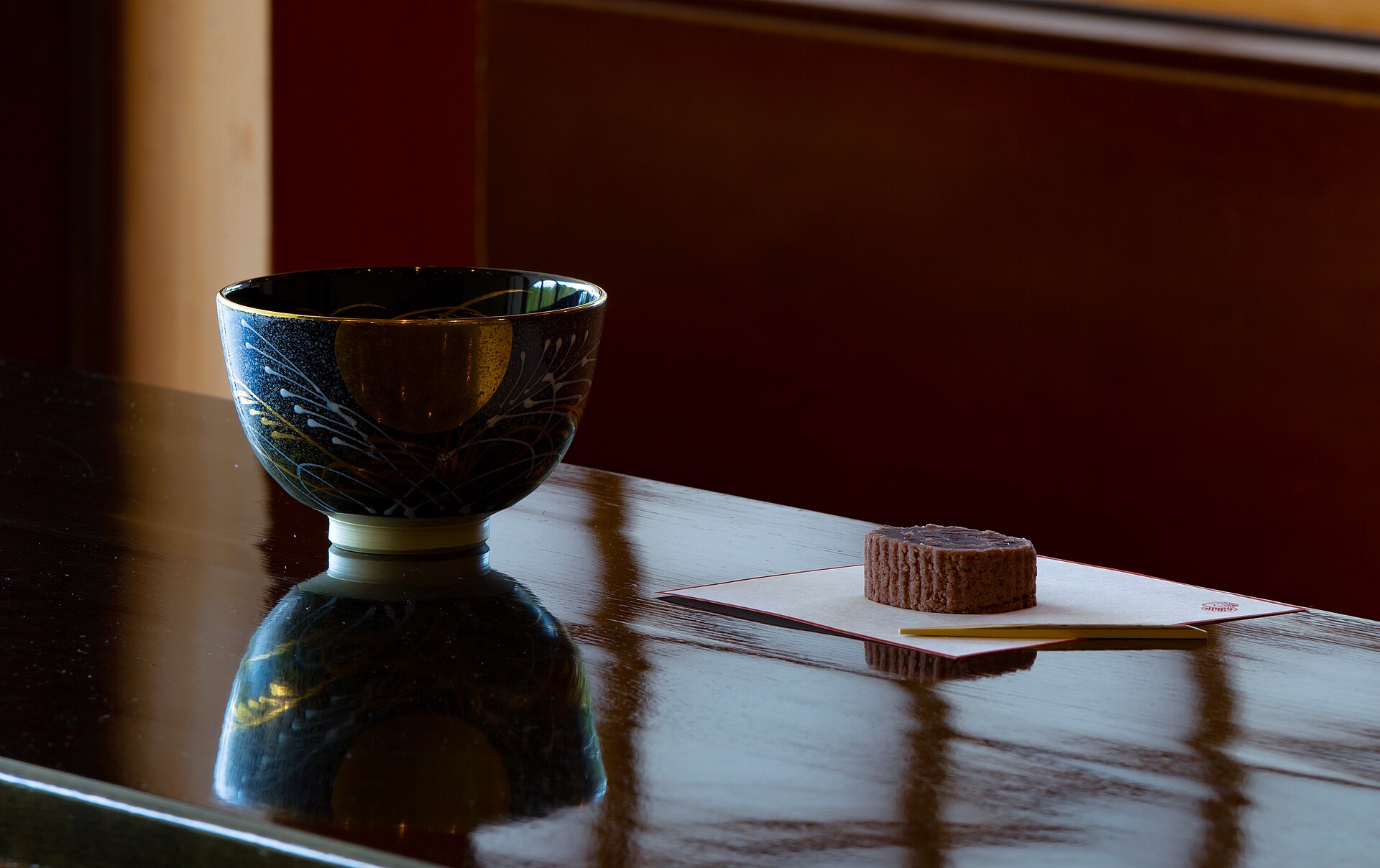
- The bowl. A tea bowl may keep the texture of the clay. A small crack is not treated as a flaw. It is read as a record of the time the vessel has gathered.
- The room. The tea room is simple and plain. Its beauty is the presence of the materials themselves, not built-up decoration.
- The utensils. Natural materials and modest forms fit the spirit of the practice.
- The garden. Tea gardens use natural materials such as rock, gravel and moss. They aim for a calm, harmonious space.
Zen garden design shaped this approach. Temple gardens were laid out with large rocks and other natural elements. Viewers were invited to lose their sense of scale and step out of themselves.
The same logic explains the respect for repaired or worn vessels. Irregular forms and signs of use tell a story that belongs to that object alone.
How does wabi sabi show up in modern life?
The idea did not stay in the tea room. It still shapes how many people look at objects and spaces.
In contemporary design, it appears in several ways:
- Minimalist interiors
- Natural materials such as wood and stone
- Ceramics and furniture that keep visible imperfection
- A preference for uncluttered, functional forms
Outside Japan, the philosophy has grown more popular as people look for simplicity and authenticity.
You can also use it as a daily habit. Notice the wear on something you own. Accept that it will change. Treat that change as part of its character. This is a practical way to absorb the idea without any special equipment.
Keep one caution in mind. Wabi sabi is not a style label for anything rough or worn. It describes a way of seeing, tied to restraint, natural materials and the passage of time.
Frequently asked questions
What is the simple meaning of wabi sabi?
Wabi sabi is a Japanese aesthetic that finds beauty in what is imperfect, impermanent and incomplete. It favors simplicity and natural materials over ornament. It also treats age and wear as value.
Is wabi sabi the same as minimalism?
They overlap, but they are not the same. Wabi sabi shares a love of simplicity and uncluttered design. It also values asymmetry, roughness and the marks of time, which minimalism does not require.
Who is Sen no Rikyu and why does he matter here?
Sen no Rikyu was a tea master who lived from 1522 to 1591. He brought the wabi aesthetic to its fullest form in wabi-cha. He stripped away decoration and valued the true nature of each object.
Why is a cracked tea bowl not seen as a flaw?
In wabi sabi, a crack shows the time a vessel has gathered. It is accepted as part of the object’s story. That view is why imperfection can raise an object’s worth in tea culture.
Related reading
- Japanese new year tea rituals: The magic of Obukucha
- Does Japan Celebrate Christmas? Lights, Cake and Fried Chicken
Sources
- Wabi-sabi | The Art of Impermanence and Imperfection (japan-unknown.com, accessed 2026-11-23)
- Wabi-sabi — Wikipédia (en.wikipedia.org, accessed 2026-11-23)
Photo: Matcha chawan and wagashi at teahouse in Japanese garden, by Laitche, CC BY-SA 4.0 (Wikimedia Commons)